The Confidence Trap: Why an AI Summary Isn't a Search Result
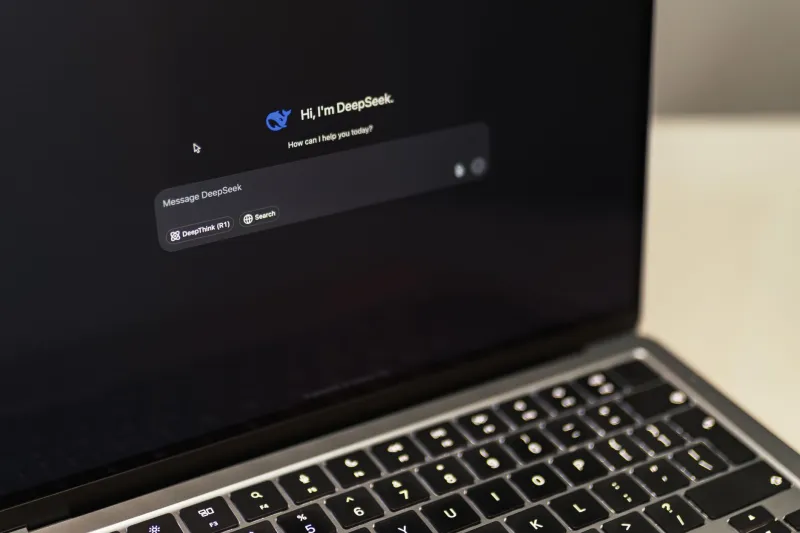
Somewhere in the last couple of years, the shape of a search changed. You used to get ten blue links and an implicit invitation to judge them. Now you often get a paragraph — calm, well organized, grammatically flawless — that answers the question before you've finished typing it.
That paragraph is not a search result. It's a claim. And the difference matters more than most of us have adjusted to.
Fluency is doing a lot of the persuading
Psychologists have a name for it: processing fluency. When text is easy to read, we rate it as more credible, more accurate, and more trustworthy — even when the content is identical. AI summaries are optimized for exactly that. Clean transitions, tidy bullets, no hedging, no visible uncertainty.
Real sources don't look like that. Real sources are messy. A government page contradicts itself in footnote four. A study's abstract overstates what the results section actually shows. A company's help doc is three versions out of date. The AI summary smooths all of that away, and in doing so it removes the texture that used to tell you where to be careful.
So the useful question isn't "is this summary good?" It's "what would I have to do to check it?"
The four failure modes worth memorizing
Stale facts. Models and summaries are trained on, or grounded in, material that has an end date. Fees, deadlines, laws, and product specs move. A summary that was right in early 2025 can be quietly wrong today, and it will say so with unchanged confidence.
Blended sources. Two studies with similar-sounding findings get merged into one tidy sentence — except one was about college students and the other about retirees, and the sample sizes differ by a factor of fifty. The average of two real facts is often a fake fact.
Invented or dead citations. Sometimes the link goes to a real page that doesn't say what the summary claims. Sometimes the link goes nowhere at all. This is the easiest failure to catch and the one people check least.
Confident paraphrase of contested claims. Ask a chatbot about nutrition, tax treatment of a side business, or which laptop has the better screen, and you'll often get a verdict. The underlying web is a fight. The summary is a referee who didn't watch the match.
The two-click trace test
Here's the habit worth building. When a summary states something you're about to act on, give yourself two clicks to get from the claim to a primary source.
Click one: the citation. Click two: the specific section, paragraph, or table that supports the sentence. If you can't complete those two clicks, you don't have a verified fact — you have a draft.
Primary source means the thing itself, not coverage of the thing. The agency page, not the news article about the agency page. The published paper, not the university press release about the paper. The press release is a summary of a summary, and errors compound at every layer.
A checklist for when a summary is enough
Not every claim deserves a forensic audit. Match your effort to the cost of being wrong.
Let the summary stand when:
- You're exploring a topic and nothing hinges on the detail yet.
- The claim is stable and boring — what a word means, when a well-known event happened, how a common process works.
- You'd catch an error immediately because you already know the domain.
Click through when:
- Money, health, legal deadlines, or a purchase decision is on the line.
- The answer includes a number, a date, a price, or a rule with an exception.
- You're about to put the claim in writing, in a slide, or in a message to someone who will trust you.
- The summary sounds unusually tidy about something you know is complicated.
That last one is the tell. When a subject you understand well comes back to you looking suspiciously frictionless, you've just calibrated how much to trust the tool everywhere else.
The sixty-second verification routine
For anything that clears the bar above, run this:
- Open the cited source. Not the snippet. The page.
- Search inside it. Use Control+F or Command+F on the exact phrase from the summary. If the phrasing isn't there, the summary is paraphrasing — check whether the paraphrase holds.
- Look at the date. On the page itself, not in the search result. If there's no date, assume the worst and find a second source.
- Check the footing. Sample size, jurisdiction, population studied, version number. The details that got smoothed away are usually the ones that decide whether the claim applies to you.
- Find one independent confirmation for high-stakes claims. Two sources that both trace back to the same press release are one source wearing a hat.
Ask a second chatbot, and you'll often get something that sounds like confirmation. It isn't. Correlated models make correlated mistakes, and agreement between them is not evidence.
Speed isn't the enemy — skipping the check is
The case for AI summaries is real. They compress hours of reading into seconds, they surface vocabulary you'd never have searched for, and they're genuinely excellent for orienting yourself in unfamiliar territory. Nothing here argues for going back to ten blue links and vibes.
But orientation isn't arrival. The teams and individuals who get the most out of these tools in 2026 aren't the ones who trust them most — they're the ones who've built a reflex around them. Read the answer, then ask one question before you use it: where did this come from, and can I get there in two clicks?
If yes, you've got a result. If no, you've got a very persuasive first draft, and the difference is the whole ballgame.